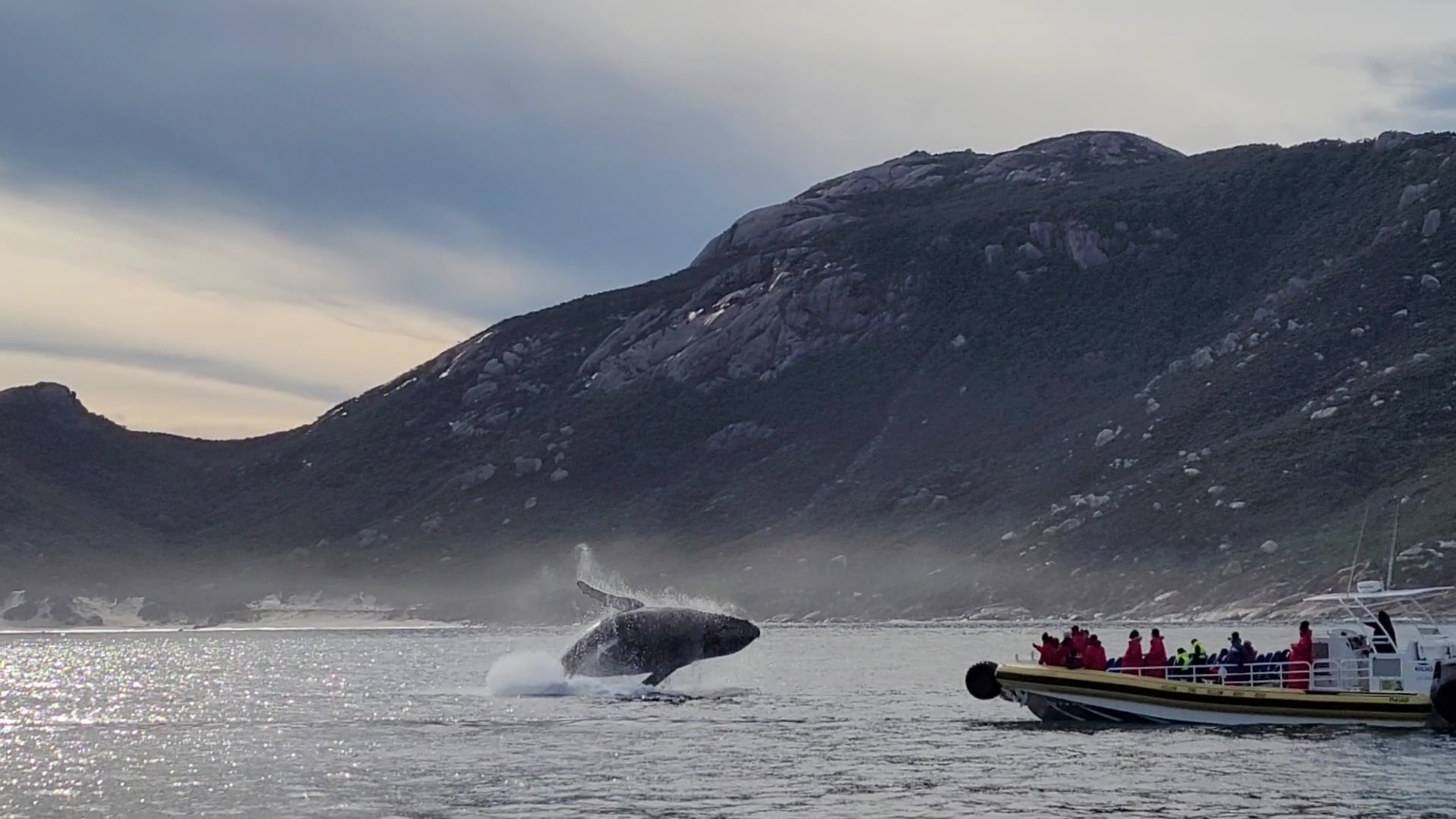
There's something almost magical about the moment you spot your first whale. That puff of vapor on the horizon. The sudden splash of a breach. The slow, graceful arc of a tail fluke disappearing beneath the waves. At Wilsons Promontory, Australia's southernmost tip of mainland Australia, these moments happen regularly during whale migration season. But spotting whales takes more than luck. It takes knowing what to look for, where to look, and when.
Whether you're planning to join a whale watching cruise or scan the coastline from shore, this guide will teach you the techniques our crew uses daily to find these ocean giants.
Understanding the whale migration season at Wilsons Prom
Each year, from May through October, the waters off Wilsons Promontory transform into a marine superhighway. Approximately 40,000 humpback and southern right whales pass by on their annual migration between Antarctic feeding grounds and northern breeding waters.
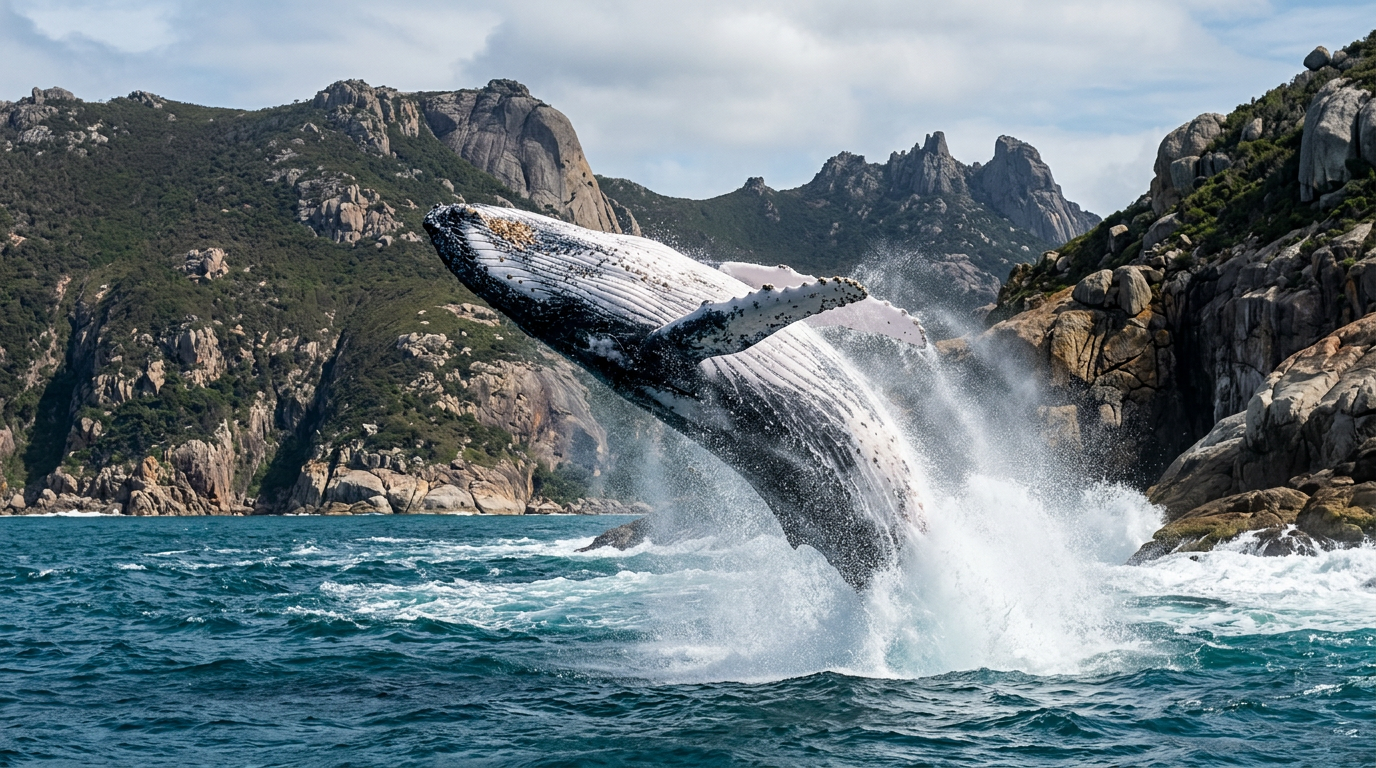
The peak season runs from June to September, when whale activity is at its highest. During these months, you're likely to see humpback whales performing their acrobatic breaches and tail slaps. Southern right whales, often traveling with calves, are also frequent visitors. These critically endangered whales are slowly rebuilding their numbers, and each sighting represents a small conservation victory.
Understanding this timing helps set realistic expectations. While whales can appear anytime during the season, your chances increase significantly during the peak months. Our whale watching cruises operate throughout this period, departing from Tidal River to access the protected waters of the Wilsons Promontory Marine National Park.
Essential whale spotting techniques
Spotting whales is part art, part science. Here are the techniques that work whether you're on a boat or standing on a clifftop.
Scanning the horizon systematically
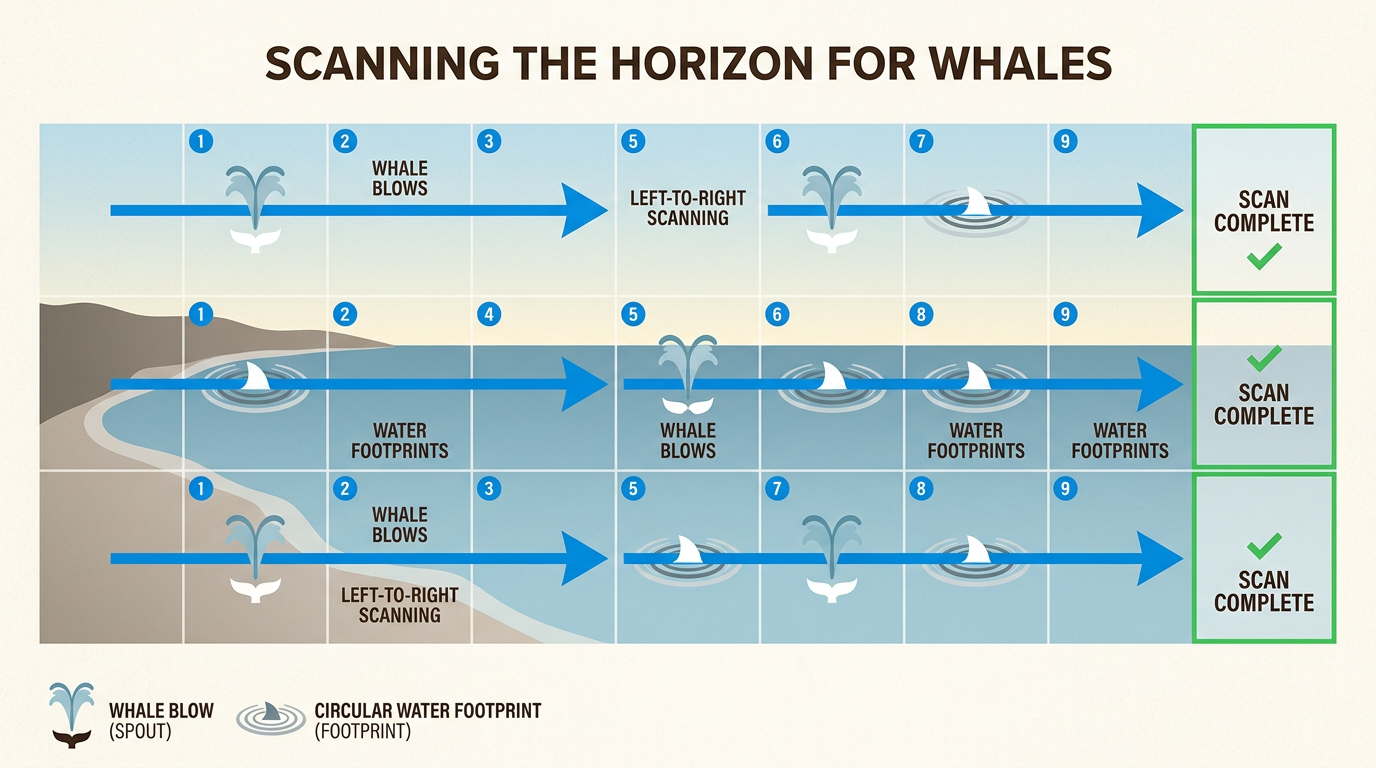
Your eyes need time to adjust to spotting patterns. Give yourself at least 30 minutes for your vision to attune to the rhythm of the ocean. Divide the horizon into sections and scan each one methodically, left to right, then right to left. This systematic approach prevents you from missing activity in your peripheral vision.
Look for disruptions in the water's natural pattern. On calm days, anything that breaks the surface rhythm deserves attention. A sudden smooth circle on the water (called a "footprint") often indicates where a whale has just been, even if you missed seeing it directly.
Recognizing the telltale signs
The blow, or spout, is your best friend when spotting whales. This cloud of vapor is created when whales exhale at the surface, and it's often visible from kilometers away on a clear day. Different species have characteristic blows:
- Humpback whales produce a tall, bushy, columnar blow that can reach 3-4 meters high
- Southern right whales create a distinctive V-shaped blow, spraying water outward in two directions
Other signs to watch for include breaches (spectacular leaps from the water that create significant splashes), tail flukes (when whales raise their tails before diving deep), and pectoral fin slaps (whales slapping the water with their long side fins).
Using environmental cues
Nature often gives hints about whale locations. Seabirds circling in one location frequently indicate whale activity below the surface. The birds are feeding on the same schools of fish that attract whales. If you see a concentration of bird activity, train your binoculars on that area.
Calm seas make spotting significantly easier. White caps and choppy water can hide the subtle signs of whale activity. Morning light, with its soft, angled illumination, offers the best visibility for spotting blows against the horizon.
Land-based vs boat-based whale watching
Both approaches have their advantages, and the best choice depends on your preferences and circumstances.
Best land viewing spots near Wilsons Prom
Several excellent vantage points offer whale watching opportunities without leaving dry land:
- Glennie Lookout (Wilsons Promontory) - elevated position with panoramic ocean views
- Pillar Point (Wilsons Promontory) - juts into the Bass Strait for excellent sightlines
- Cape Liptrap Lighthouse Lookout - popular local spot with regular sightings
- Ned Neale's lookout (Sandy Point) - faces the migration highway
- Waratah Bay - long beach with multiple viewing angles
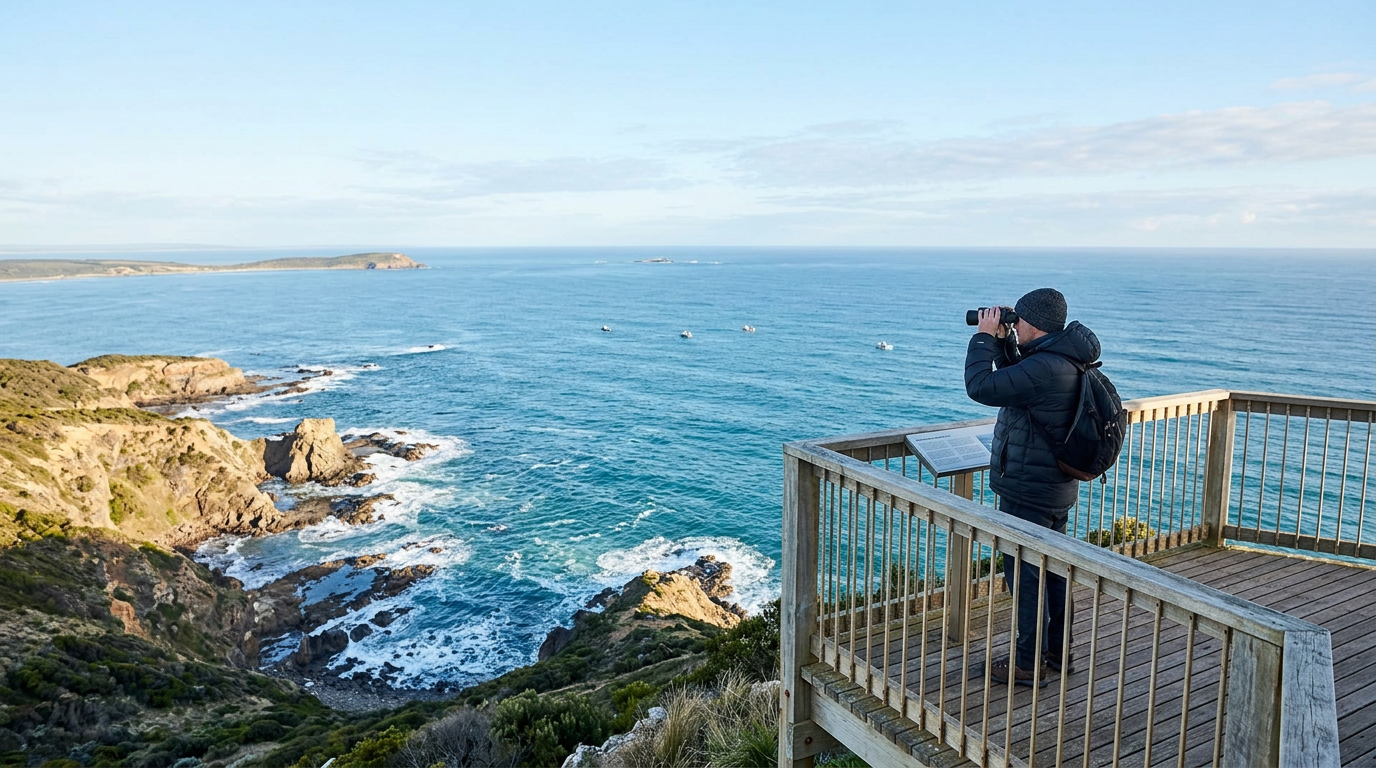
Land-based watching requires patience. Whales typically stay submerged for 3-8 minutes between breaths, so you'll spend time scanning between sightings. Bring a comfortable chair, warm layers, and binoculars. When whales do appear, the unhurried pace lets you truly absorb the experience.
Advantages of boat-based viewing
Boat tours offer distinct advantages for whale spotting. Being on the water puts you directly in the migration path, not just watching from the sidelines. Our amphibious vessels can access areas unreachable by standard boats, including secluded coastal zones where whales often linger.
The real advantage, though, is expertise. Our crew knows these waters intimately. They understand whale behavior patterns, read the ocean conditions, and can position the boat for optimal viewing while maintaining respectful distances. Real-time commentary helps you understand what you're seeing and predict where whales might surface next.
Our Wilsons Promontory cruises depart from Tidal River, giving us unique access to the marine national park. As the only commercial operator within a 30-kilometer radius, we offer perspectives unavailable anywhere else.
What to bring and how to prepare
Proper preparation makes the difference between an enjoyable experience and a miserable one.
Essential gear for whale watching
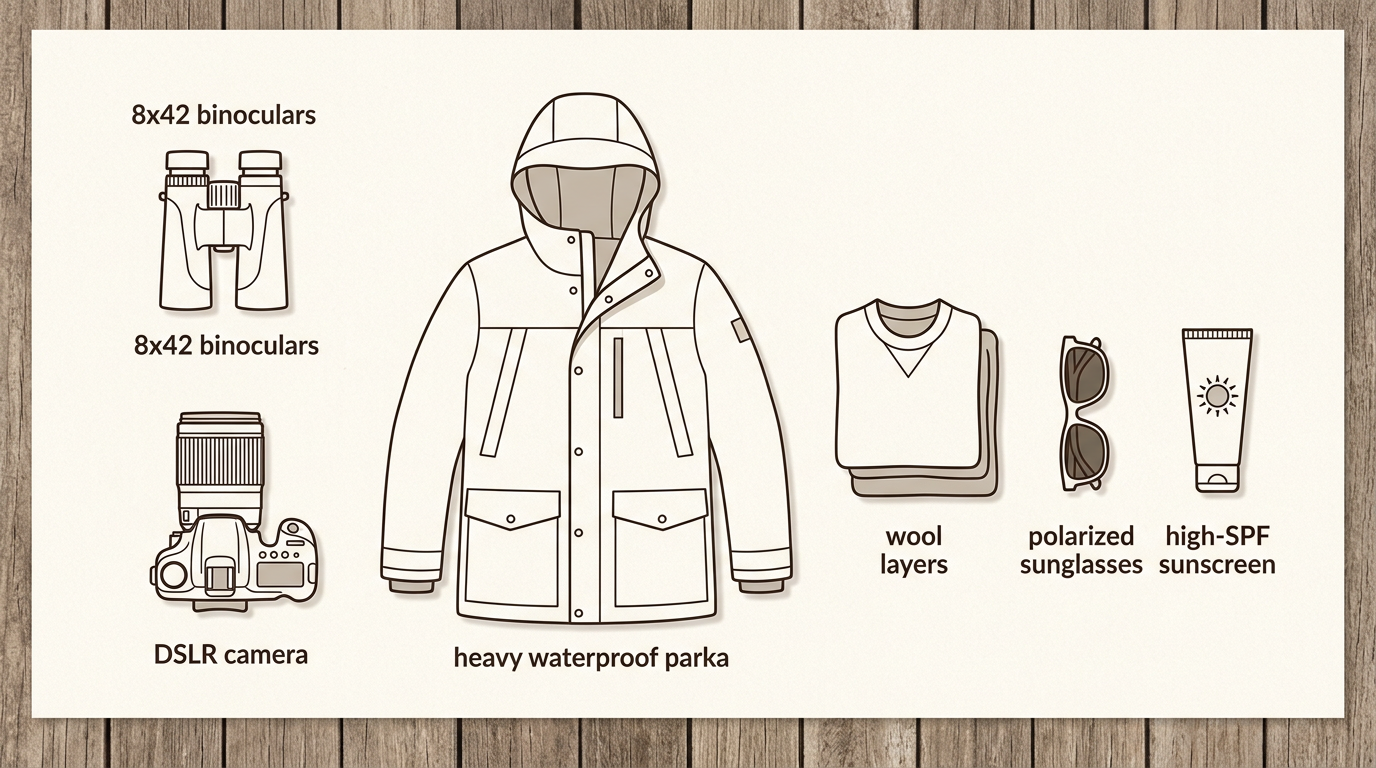
Binoculars (8x42 magnification recommended) extend your viewing range significantly. While you can spot whales with the naked eye, binoculars reveal details like breaching behavior and calf interactions that make the experience richer.
Camera equipment should include fully charged batteries and plenty of storage. Put your phone in airplane mode to conserve battery life. If you're using a phone camera, keep it in video mode. Whales surface unpredictably, and video captures moments you might miss with still photography.
Clothing is critical. Even on sunny days, wind chill on the water or exposed clifftops can be significant. Layer up with warm, waterproof clothing. Non-slip footwear is essential on boats and rocky lookouts. Don't forget sun protection: hat, sunscreen, and sunglasses.
Setting realistic expectations
Whale behavior is inherently unpredictable. These are wild animals, not performers. Some days they breach repeatedly; other days they remain submerged for long periods. Understanding this unpredictability is part of the experience.
When you spot a whale, note its travel direction. Whales generally maintain consistent paths, so knowing which way they're heading helps predict where they'll surface next. Our crew uses this technique constantly to position our vessels for the best viewing angles.
Remember that whales aren't the only wildlife worth watching. Australian fur seals lounge on Kanowna Island, common dolphins frequently ride the bow waves, and shy albatross soar overhead with their impressive 2.1 to 2.6-meter wingspans. For more preparation tips, check our guest information page.
Responsible whale watching guidelines
Responsible viewing isn't just good ethics. It's the law, and it ensures these magnificent animals continue visiting our waters for generations to come.
Understanding the regulations
Licensed whale watching operators work under strict marine mammal permits that regulate how we approach and observe whales. These regulations exist to minimize disturbance to the animals while still allowing meaningful viewing experiences.
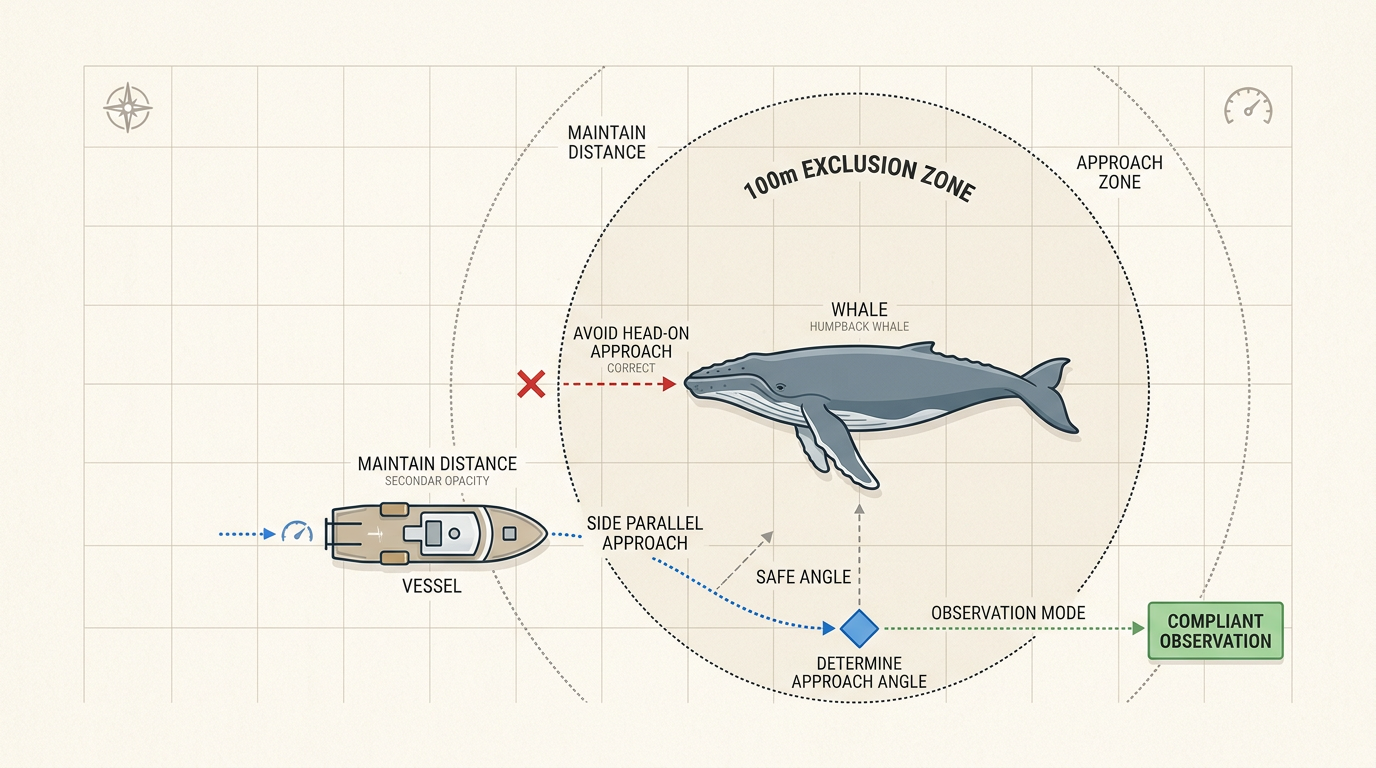
Key rules include maintaining minimum approach distances (100 meters for most whale species) and limiting observation time. Vessels must avoid cutting across whale paths or boxing them in. Our crew is trained in these regulations and follows them rigorously.
How to be whale wise
If you're watching from a private boat or encountering whales unexpectedly, follow Be Whale Wise principles. Slow down if you see other vessels stopped, as this often indicates whale activity nearby. Never approach whales directly; instead, travel parallel to their path at a safe distance.
Reporting sightings helps protect whales from ship strikes. Apps like WhaleReport share sighting data with large vessel operators, allowing them to slow down or alter course when whales are present. Your observation could save a whale's life.
At Wanderer Adventures, responsible viewing is woven into everything we do. We hold Ecotourism certification and operate under strict Marine Mammal permits. Our environmental sustainability practices ensure minimal impact on the marine ecosystem we share.
Making the most of your whale watching experience
A few simple strategies can transform a good whale watching trip into an unforgettable one.
Practical tips for success
Arrive early and give yourself time to settle in. Rushing to the rail or lookout point means starting your scan already stressed. Take a few minutes to orient yourself, feel the conditions, and let your eyes adjust.
Listen to your crew or guide. Their commentary isn't just informative; it's based on years of experience reading whale behavior. When they point out a direction, focus your attention there. They've likely spotted a blow or behavioral cue you haven't noticed yet.
Balance photography with simple observation. Some of the most powerful whale watching moments happen when you put the camera down and just watch. The memory of a breaching whale framed by the Wilsons Promontory coastline often proves more lasting than a blurry photo.
When the whales don't appear
Sometimes, despite perfect conditions and expert guidance, whales remain elusive. This is simply the nature of wildlife watching. When this happens, shift your focus to the other wonders around you. The coastal scenery at Wilsons Promontory is spectacular in its own right. Seals, dolphins, seabirds, and the dramatic rock formations of Skull Rock offer plenty to observe and photograph.
Consider purchasing a gift voucher if your first attempt doesn't succeed. Whale watching is worth multiple tries, and our vouchers never expire.
Book your Wilsons Promontory whale watching adventure
There's nothing quite like witnessing humpback whales breaching against the backdrop of Wilsons Promontory's rugged coastline. Whether you're scanning from a windswept lookout or feeling the salt spray from our amphibious vessel deck, the experience connects you to one of nature's most remarkable journeys.
At Wanderer Adventures, we combine decades of local knowledge with exclusive access to the Wilsons Promontory Marine National Park. Our crew doesn't just find whales; they help you understand what you're seeing and why it matters. Every tour contributes to conservation efforts and supports the local Gippsland economy.
Ready to put these spotting techniques into practice? Book your whale watching cruise today and experience why whale watching at the Prom consistently ranks among Victoria's most memorable wildlife encounters.