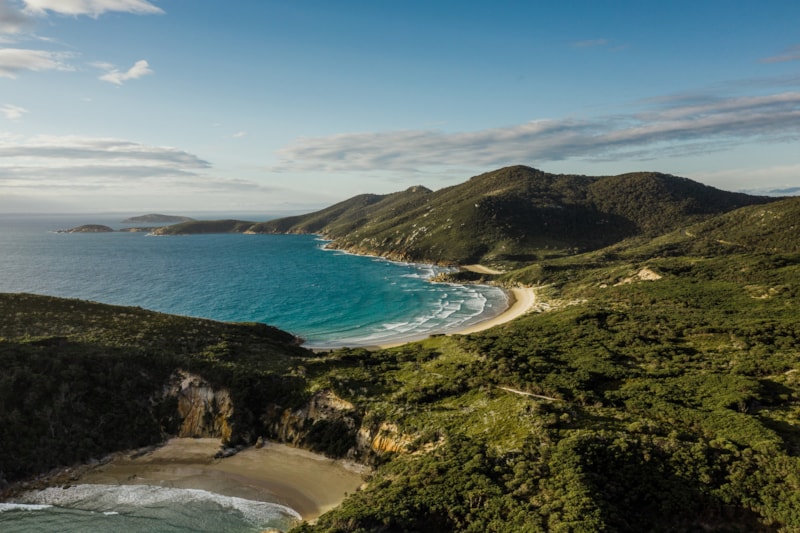
Wilsons Promontory National Park sits at the southernmost tip of mainland Australia, a rugged peninsula where mountains meet the sea and wildlife roams freely. For photographers, it's a paradise of diverse landscapes packed into a surprisingly compact area. Within a five-kilometer radius of Tidal River, you can shoot windswept surf beaches, granite mountain peaks, verdant rainforest, and abundant wildlife. Often called "The Prom" by Victorians, this national park offers something for every skill level and every time of day.
Whether you're chasing the first light from a mountain summit, capturing long exposures at sunset, or pointing your camera at the Milky Way in one of Victoria's darkest skies, Wilsons Prom delivers. This guide covers the best photography spots at Wilsons Prom, from accessible beaches to remote viewpoints, and includes practical tips for making the most of your visit.
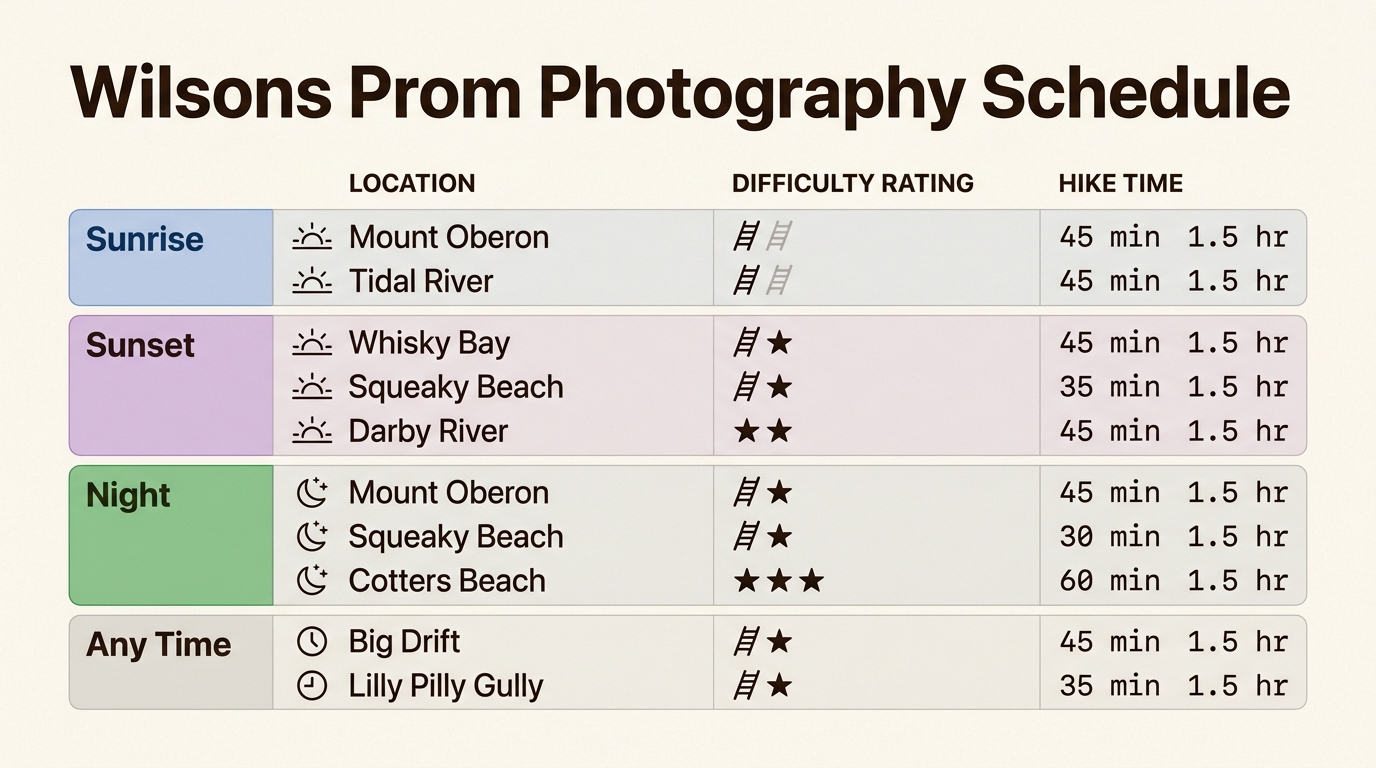
Sunrise photography: where to catch the first light
The eastern and southern aspects of Wilsons Promontory create excellent opportunities for sunrise photography. Here are the two best spots to start your day.
Mount Oberon summit
If you're willing to put in the effort, Mount Oberon offers the premier sunrise experience in the park. At 558 meters above sea level, the summit provides stunning 360-degree panoramic views across the Prom. You can see the Southern Ocean stretching to the east, south, and west simultaneously, with Mount Latrobe (the park's highest point at 754 meters) visible to the northeast.
Access depends on the season. In winter, you can drive directly to the Telegraph Saddle car park and hike from there. The trail is a 3.2-kilometer walk that takes about an hour each way. It's a wide, graded track with benches for resting, so while it's long, it's not technically difficult. In summer, the car park closes and you'll need to either hike from Tidal River or catch the shuttle bus (check times at the Visitor Centre).
Photography tips for Mount Oberon:
- Use the granite rocks in the foreground for compelling wide-angle compositions
- The summit ridge offers different perspectives as you move south toward the highest point
- Weather changes quickly here, so bring layers and be prepared for clouds rolling in (which can create dramatic conditions)
- The stairs cut into the granite near the summit can be slippery, so hold the handrails
Tidal River and Norman Bay
For a more accessible sunrise option, Tidal River and adjacent Norman Bay offer beautiful morning light without the hike. The river itself creates mirror-like reflections when the tide is still, and the boardwalks provide excellent vantage points.
The orange-tinted rocks around Tidal River catch the golden morning light beautifully, contrasting with the lush green vegetation behind them. The curved footbridge makes for an elegant composition, and the river's meeting point with Norman Bay offers multiple perspectives in one location.
The Loo Ern boardwalk has observation platforms at particularly beautiful outlooks, perfect for setting up a tripod. Check the tides before you go; still water creates mirror reflections, while moving tidal water creates different effects.

Sunset photography: golden hour on the west coast
The western-facing beaches of Wilsons Promontory are famous for their sunset photography opportunities. Here are the top three locations to capture the last light.
Whisky Bay
Whisky Bay has earned its reputation as the sunset beach of Wilsons Prom. A short five-minute walk from the car park brings you to a beach where rock formations align with the setting sun at certain times of year, creating natural frames and leading lines for your compositions.
The boulders scattered along the beach are perfect for seascape photography. You can experiment with ND filters and slow shutter speeds to smooth the water, or lower your aperture to create sunstars when the sun lines up with gaps in the rocks. This is also an excellent spot for long exposure photography after the sun dips below the horizon.
Squeaky Beach
Named for the sound its white quartz sand makes under your feet, Squeaky Beach offers a different kind of sunset photography. The beach features distinctive red boulders at the southern end, with a small stream that flows from the bush and runs past some of the rocks.
This stream creates excellent composition opportunities, especially when there's enough water flowing. The contrast of flowing water against statuesque rocks makes for compelling images. You'll need a waterproof tripod here, as the best compositions often require getting close to the water.
Keep in mind that the sun sets on the western side of the beach, so you'll get direct light until late in the day. At the northern end, following the trail up the headland offers views back down onto the beach with interesting coastal vegetation.
Darby River
Darby River car park sits right on the main road, making it an easy stop if you're heading to or from other locations. The light here can be spectacular as the sun rises or sets, with beams spilling over the hilltops and creating dramatic side-lighting opportunities.
This is more of a quick-stop location than a destination in itself, but the quality of light makes it worth pulling over for a few frames.
Wilsons Prom photography spots beyond the standard beaches
While the beaches get most of the attention, Wilsons Prom offers unique landscapes that can set your photography apart.
The Big Drift
The Big Drift is like stepping onto another planet. This vast area of sand dunes sits right at the entrance to the park, offering what photographers call the "Tatooine effect" after the desert planet from Star Wars. The huge dunes create spectacular shadow patterns during golden hour.
To reach the dunes, park at the Saddle Yard camping area and walk for 30-45 minutes. The area is large enough that you should keep track of your route to find your way back. Morning visits offer pristine sand without footprints, while evening provides better light (though more footprints from daytime visitors).
Lilly Pilly Gully and Mount Bishop
For something completely different from the coastal shots, head to Lilly Pilly Gully. Starting from the Lilly Pilly Gully car park, a 2.6-kilometer walk takes you through rainforest boardwalks surrounded by ferns and mosses. This environment is perfect for macro photography and comes alive in misty or rainy conditions.
For the more ambitious, add the five-kilometer Mount Bishop extension. The hike takes you through post-bushfire regrowth rich with ferns, eventually reaching views across to Mount Oberon and out over the western beaches.
Night photography: capturing the dark skies
Wilsons Promontory is one of Victoria's best locations for astrophotography. The park has virtually zero light pollution, meaning you can see the Milky Way with your naked eye on clear nights.
Best night photography locations
Mount Oberon summit is exceptional for night photography, offering panoramic views of the night sky with interesting foreground elements in every direction. Squeaky Beach provides the classic Milky Way over white sand composition. The Cotters Beach area offers open sky views with interesting foreground options.
Planning your astrophotography
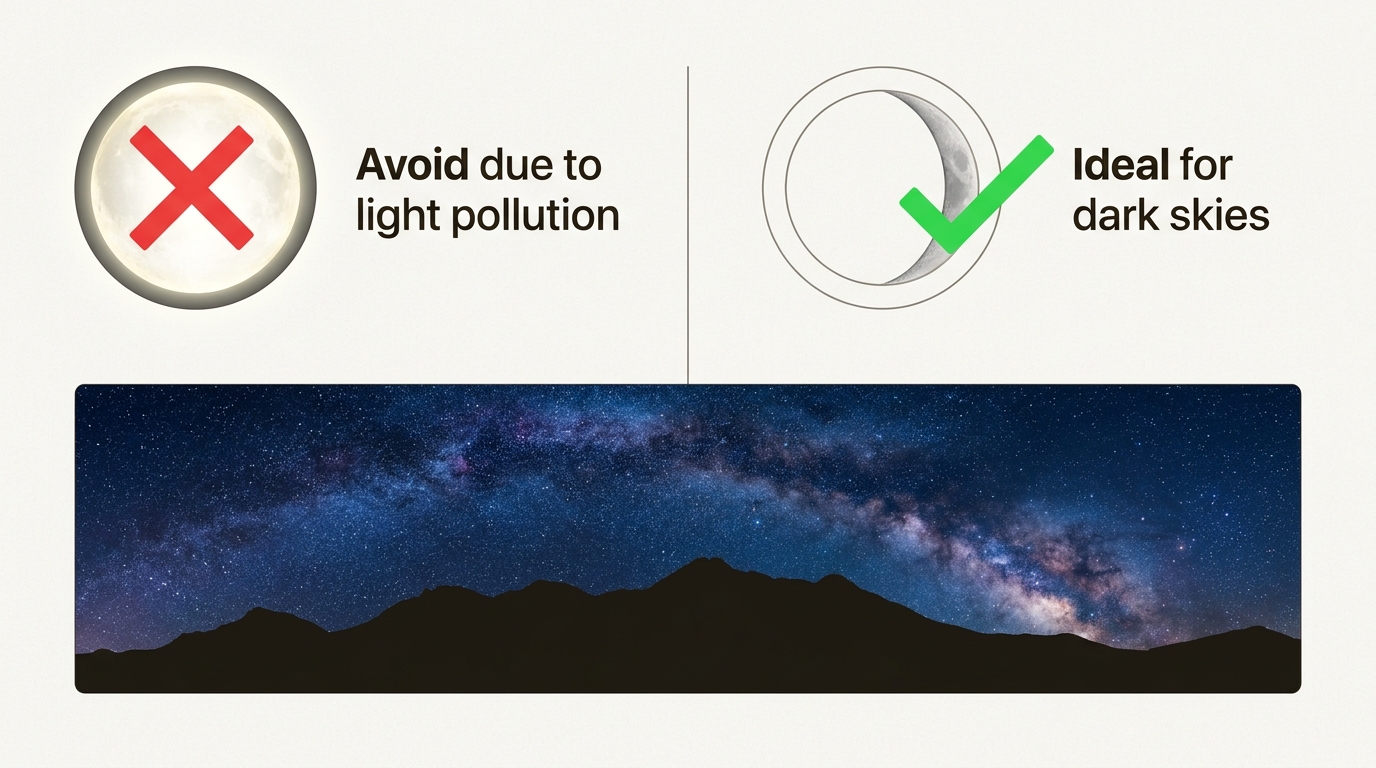
Successful night photography requires planning. Check the lunar cycle before your visit; a full moon floods the sky with light and washes out the stars. Use moonset timing tools to plan when the sky will be darkest.
Essential equipment for night photography at the Prom includes:
- A stable tripod (wind can be strong)
- Remote shutter release or intervalometer
- Warm clothing (even summer nights get cold)
- Headlamp with red light mode to preserve night vision
- Extra batteries (cold drains power quickly)
Marine and wildlife photography from the water
Here's where Wilsons Promontory photography gets really interesting. While most guides focus entirely on land-based locations, some of the most dramatic shots come from the water itself.
Wanderer Adventures operates amphibious boats that launch directly from the beach into the Wilsons Promontory Marine National Park. This unique access opens up photography opportunities that land-based visitors simply cannot reach.
Locations accessible only by boat
Skull Rock is a dramatic granite formation rising from the Bass Strait that looks exactly like its name suggests. Photographed from the water, it offers a completely different perspective than any land-based location.
The Glennie Islands provide seabird photography opportunities and dramatic rocky shorelines that are inaccessible by foot.
Kanowna Island hosts a large fur seal colony. From a boat, you can photograph these charismatic animals in their natural habitat, along with the birds that share the island.
Marine wildlife opportunities
A boat-based photography trip opens up wildlife opportunities beyond what's available on land:
- Seals: Both at Kanowna Island and occasionally swimming near boats
- Dolphins: Common throughout the Bass Strait around the Prom
- Whales: Seasonal visitors including Humpback whales, Southern Right whales, and occasionally Orcas
- Seabirds: Sea eagles, gannets, and numerous other species
The water-level perspective also creates unique landscape compositions of the coastline itself, showing the granite cliffs and headlands from angles that emphasize their scale and drama.
Essential photography tips for Wilsons Prom
Equipment recommendations
A wide-angle lens is essential for capturing the expansive landscapes of the Prom. Something in the 10-22mm range is ideal, though any wide-angle will work. A tripod is mandatory for low-light conditions, long exposures, and astrophotography.
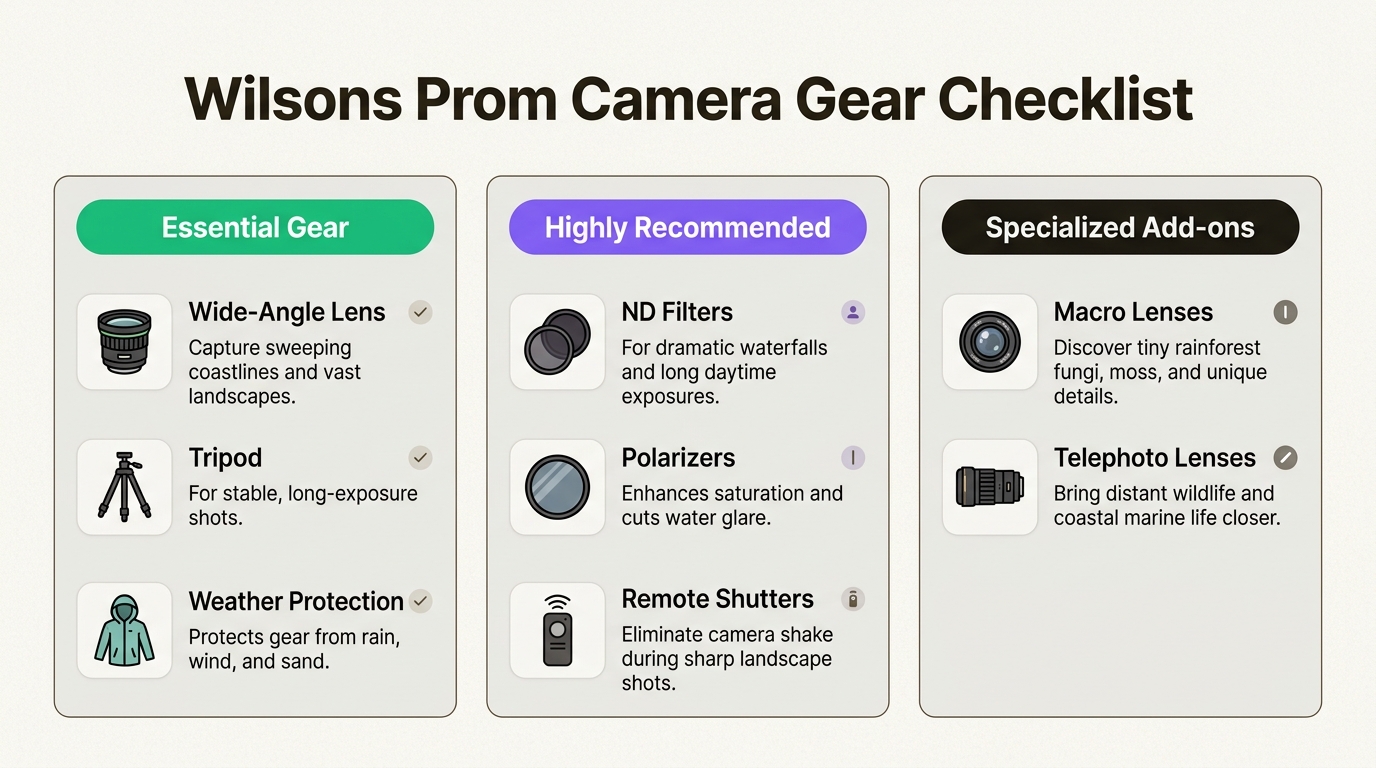
Additional gear to consider:
- ND filters: For smoothing water and capturing motion in bright conditions
- Polarizing filter: Deepens skies and reduces glare on water
- Macro lens: For forest details like mosses, fungi, and insects
- Telephoto (200mm+): For wildlife including kangaroos, birds, and marine animals
- Waterproof camera protection: For beach and boat photography
Timing and planning
Check tide times before heading to coastal locations. High tide can completely change the accessibility and appearance of beaches and rock formations. Some compositions only work at specific tide levels.
Don't be discouraged by "bad" weather. Stormy conditions create moody, dramatic shots at coastal locations. Mist and rain enhance the rainforest sections of Lilly Pilly Gully. Rapidly changing conditions at Mount Oberon can produce spectacular light breaks.
Pack for changing conditions regardless of season. Wilsons Promontory weather can shift quickly, especially near the coast. Layers are essential, and rain protection for yourself and your gear is wise.
Start planning your Wilsons Prom photography adventure
Wilsons Promontory offers one of the most diverse photographic landscapes in Australia. From sunrise mountain panoramas to sunset beach compositions, from rainforest macro shots to Milky Way astrophotography, the variety is remarkable. The fact that all of this exists within a compact national park just 2.5 hours from Melbourne makes it accessible for both day trips and extended photography expeditions.
The combination of land-based locations and boat-accessible areas creates opportunities you won't find elsewhere. While the beaches and mountains of the main park deliver consistently excellent results, adding a marine perspective through a boat tour opens up entirely new creative possibilities.
Wanderer Adventures offers several options for photographers looking to capture the Prom from every angle. The Ultimate Day Cruise provides 5.5 hours on the water, reaching remote locations including Skull Rock and the Glennie Islands. For those specifically chasing golden hour light, the Sunset Cruise offers 1.5 hours of evening navigation along the coastline.
Whether you're a local photographer looking for new compositions or a visitor planning a photography-focused trip to Victoria, Wilsons Promontory delivers. Pack your gear, check the tides and weather, and prepare to capture some of Australia's most spectacular coastal scenery.