Introduction: when the beach sings beneath your feet
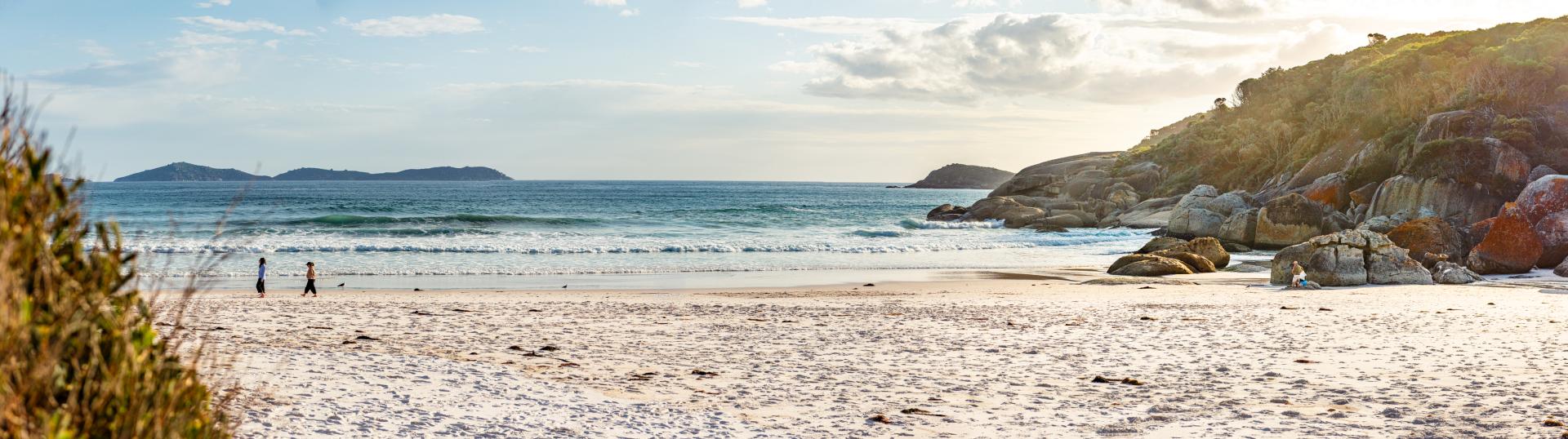
There's a moment of pure childlike wonder that happens the first time you hear it. You're walking across the brilliant white sand of Squeaky Beach at Wilsons Promontory, and with each step, the beach beneath your feet lets out a high-pitched squeak. Not a subtle crunch. Not the soft silence of ordinary sand. But a clear, musical note that sounds almost like a violin string being gently plucked.
For many Australians, this experience is so familiar that they assume all beaches sound this way. As Sunshine Coast local Cassie Fenton discovered when she posted a video of squeaky sand that went viral with over 1.7 million views, many Australians genuinely believed the phenomenon was normal worldwide. The comments told a different story. European travellers expressed shock at hearing it for the first time. American visitors called it "magical." Even SZA, the Grammy-nominated artist, liked the clip.
But Squeaky Beach isn't normal. It's extraordinary. And the science behind why this sand sings makes Wilsons Promontory home to one of the rarest acoustic phenomena on Earth.
What makes sand squeak: the granular physics
The squeaking sound isn't magic. It's physics. Specifically, it's the sound of friction between uniformly sized grains of quartz sand rubbing against each other under pressure.
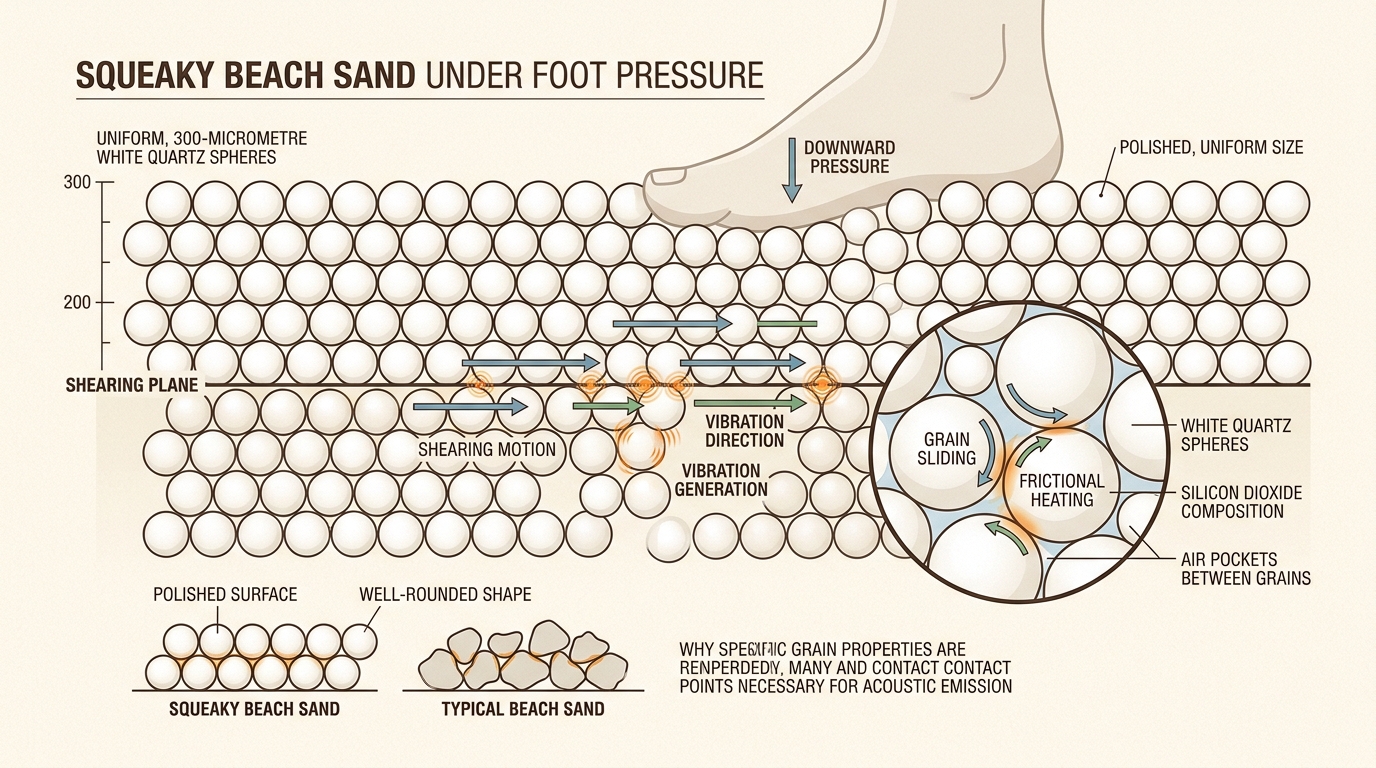
Here's the short version: for sand to squeak, it needs four very specific characteristics. First, the grains must be nearly pure quartz (silicon dioxide), which gives Squeaky Beach its pearly white appearance. Second, those grains must be remarkably uniform in size, typically around 300 micrometres in diameter. Third, they must be well-rounded and polished smooth, like tiny glass beads. And fourth, they must be completely dry.
When you step on sand with these properties, the grains on the surface get displaced and rub against the surrounding sand layer. Because the grains are uniform, rounded, and polished, they glide over each other in unison. This creates a shearing action that makes the sand grains vibrate. Those vibrations transfer to the air pockets between the grains, and when they reach your ear, you hear them as a squeak, whistle, or high-pitched yelp.
Professor Patrick Hesp, a coastal geomorphology expert at Flinders University, explains it simply: the squeaking results from "the friction of fine, dry, well-rounded grains of sand rubbing against each other." The frequency depends on the grain size, the shearing strength, and the grain structure, which is why the sound can vary from a light squeak to a high-pitched shrill.
Ordinary beach sand doesn't squeak because it lacks these precise conditions. Regular sand is a mixture of grains with different sizes, shapes, and compositions, including crushed shell particles and organic matter. When you step on it, the smaller particles fill the gaps between the larger ones, forming a compact mass that doesn't allow the smooth sliding action needed to produce sound. Similarly, wet sand stays silent because moisture inhibits the proper shearing of grains.
Wilsons Promontory's globally significant sand
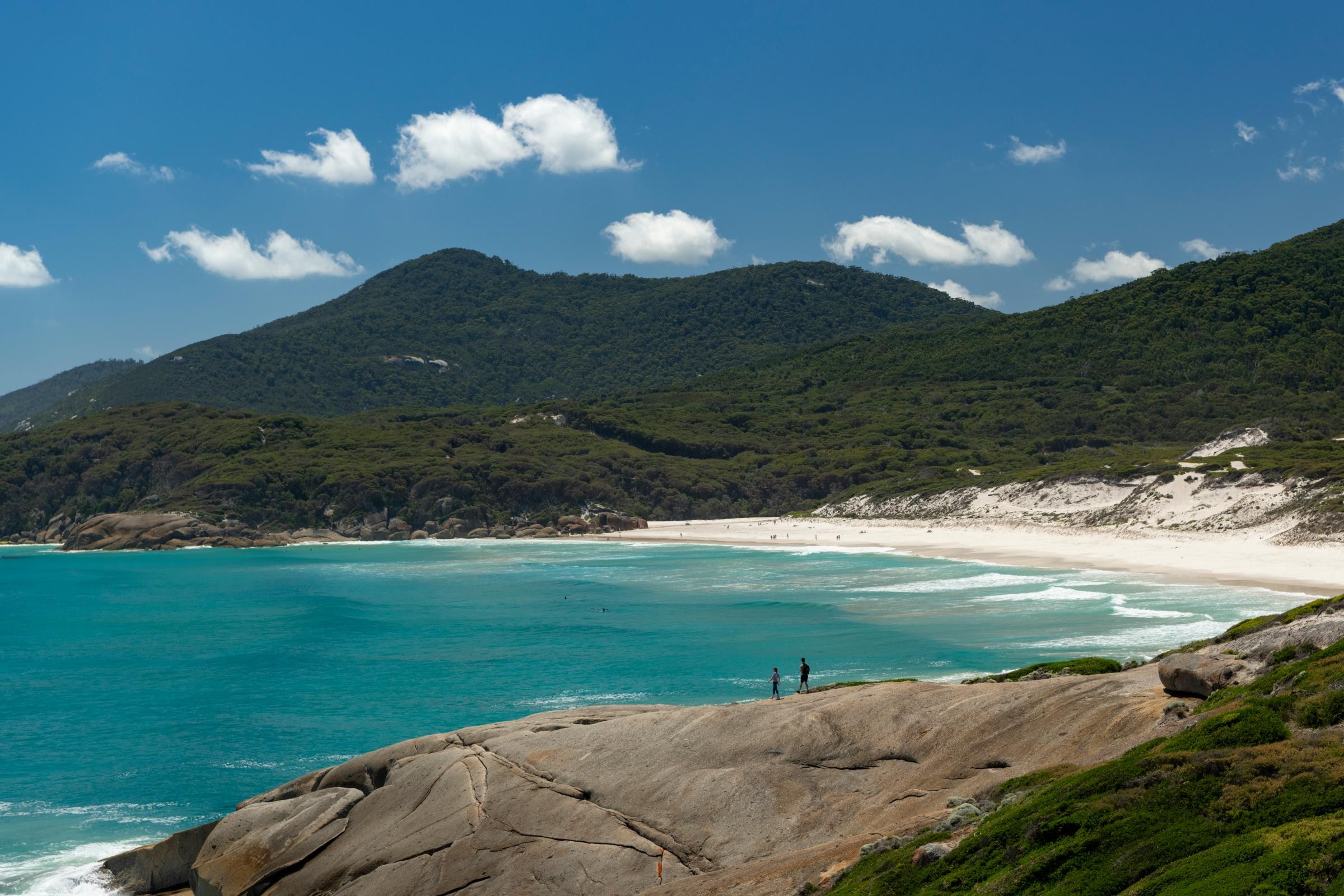
While singing beaches exist on every continent except Antarctica, Squeaky Beach at Wilsons Promontory is internationally recognised by geologists as one of the finest examples of this phenomenon in the world.
Research by Museums Victoria confirms that the eroding Squeaky Beach foredune is the immediate source of much of the adjoining beach sand. This matters because the foredune provides a continuous supply of fresh, clean quartz grains that meet all the acoustic requirements. As the dune erodes, it deposits new sand onto the beach, maintaining the ideal conditions that make the phenomenon possible.
The beach environment at Wilsons Promontory creates perfect conditions for producing these acoustic grains. High-energy wave action filters and sorts the sand particles, depositing evenly sized grains on the shore. The strong wave action also abrades the sand particles over time, smoothing their surfaces. When the sand dries under the sun, salt from the seawater can form a layer atop it, enhancing the evenness of the surface even further.
Australia has over 12,000 recorded beaches, yet squeaky sand remains relatively uncommon. Other famous examples exist at places like Kotobikihama in Japan, Manchester-by-the-Sea in Massachusetts, and along the shores of Lake Michigan. But Wilsons Promontory's combination of pure quartz composition, high-energy coastal environment, and the continuous supply from the eroding foredune makes Squeaky Beach particularly special.
Squeaking sand vs booming dunes: two different phenomena
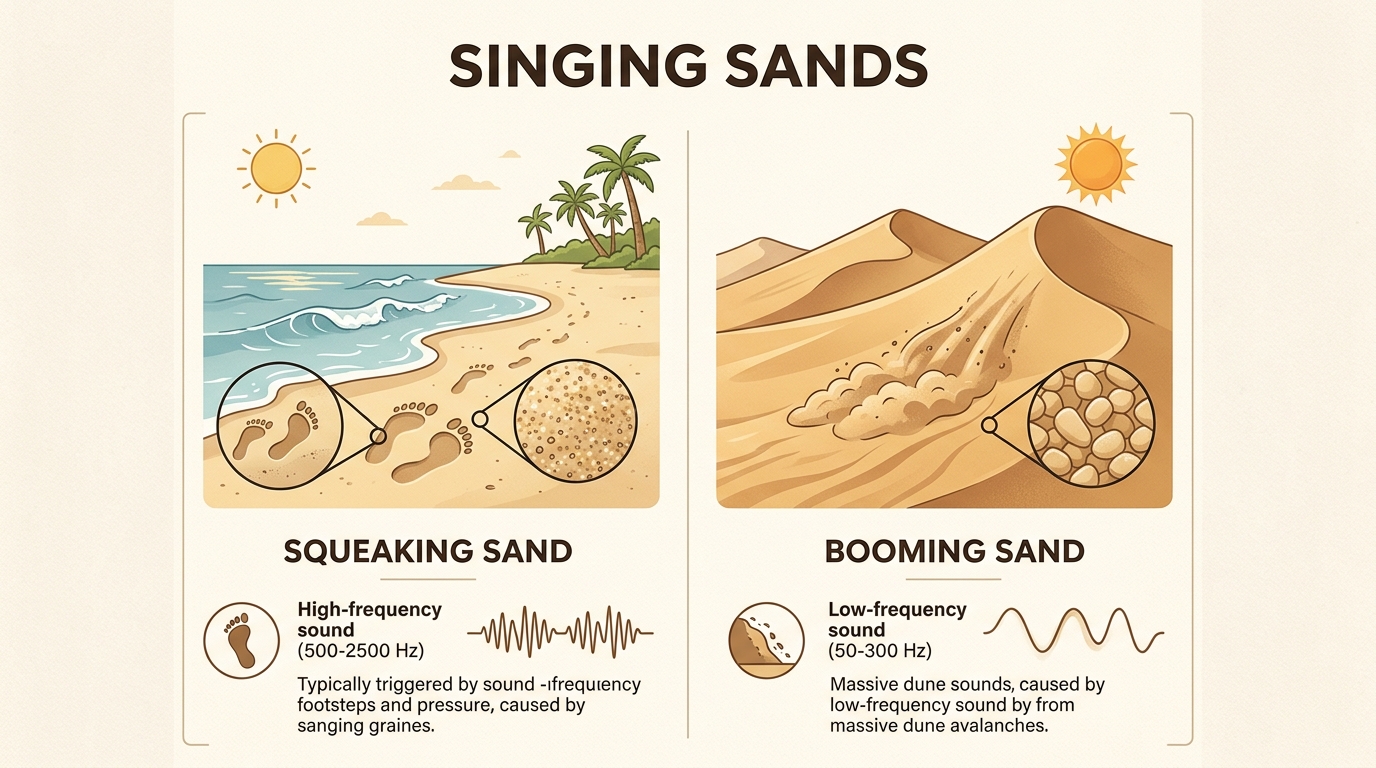
It's worth understanding that "singing sand" actually describes two distinct acoustic phenomena that are often confused.
Squeaking sand, like what you'll find at Wilsons Promontory, is the more common variety. It produces short, high-frequency sounds (between 500 and 2500 Hz) when compressed or sheared, such as when you walk across it. This type occurs on beaches, lake shores, and riverbeds around the world.
Booming sand is far rarer and more dramatic. Found primarily in large, isolated desert dunes, it produces loud, low-frequency sounds (typically 50 to 300 Hz) during avalanching events. These emissions can resemble hums, moans, drums, thunder, foghorns, or even the drone of low-flying aircraft. Large-scale slumping events can be heard up to 10 kilometres away and last as long as 15 minutes.
The distinction between these two types of sound-producing sand has been documented for over a thousand years. Marco Polo wrote of evil desert spirits that "at times fill the air with the sounds of all kinds of musical instruments" during his travels in 1295. Charles Darwin mentioned booming dunes in his classic "Voyage of the Beagle." References appear in the "Arabian Nights" and even Frank Herbert's science fiction classic "Dune."
Both types of sand require smooth, well-sorted grains, but they differ in their shearing mechanism and acoustic output. Squeaking sand responds to compression, which is why walking produces the sound. Booming sand responds to the shearing action of large-scale avalanches. The University of Michigan Physics Department notes that while both varieties produce unexpectedly pure acoustic emissions, their respective sounding mechanisms must be substantially different.
Why singing beaches are disappearing worldwide
Here's something that might surprise you: many of the world's famous singing beaches are going quiet. And the culprit is us.
Pollution is the primary threat. Foreign matter, clay, and oil that accumulate in shorelines and seawater disrupt the delicate shearing action of sand grains. Even small amounts of contamination can silence a beach. According to research documented by ScienceABC, the accumulation of impurities and the deformation of shorelines due to human activities have made this rare phenomenon disappear from many locations.
Coastal development compounds the problem. Artificial construction alters natural sand deposition patterns and introduces foreign materials into the quartz sand. Climate change affects weather patterns that maintain the beach environments where singing sand forms. And human traffic, particularly vehicles on dunes, damages the delicate sand structure.
Japanese physicist H. Takahara demonstrated that the singing property can technically be revived through an extensive cleaning process involving water rinsing, hydrochloric and hydrofluoric acid washes, and several hours of boiling. But as ScienceABC aptly notes, "reducing pollution and nurturing natural ecosystems seem to be much better options than subjecting countless tons of sand to a two-step acid wash."
This makes places like Squeaky Beach at Wilsons Promontory even more precious. As the only commercial operator within a 30-kilometre radius of Wilsons Promontory Marine National Park, we see firsthand how fragile these ecosystems are. The same low-impact principles that allow us to operate sustainably in the marine environment apply equally to the coastal dunes that create this acoustic wonder.
How to experience Squeaky Beach for yourself
If you're planning to visit Wilsons Promontory, experiencing Squeaky Beach should be on your list. Here's how to make the most of it.
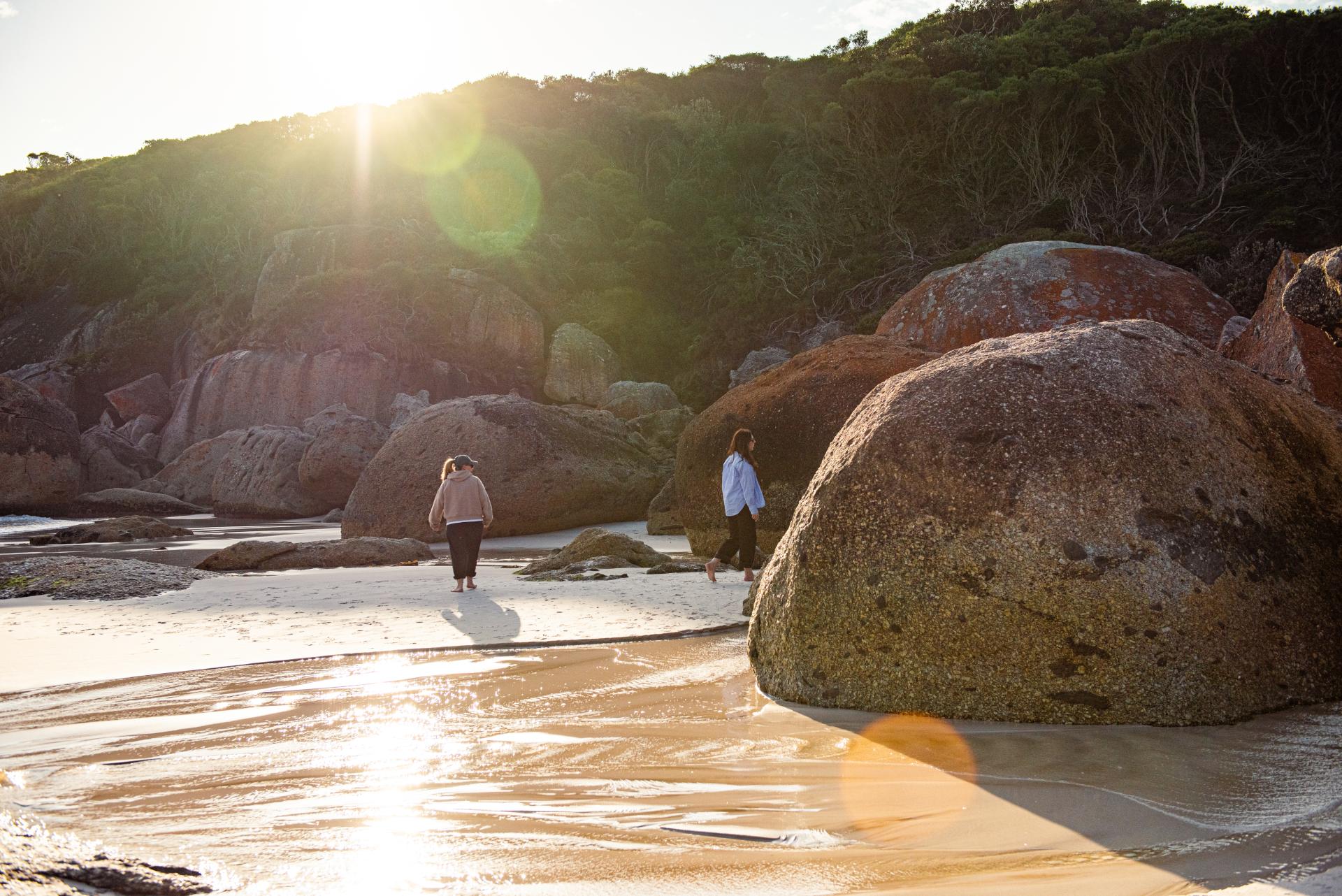
Location: Squeaky Beach is located within Wilsons Promontory National Park, accessible by a short walking track from the main road.
Best conditions: The sand squeaks loudest when it's dry and warm. Visit on a sunny day after a period without rain for the clearest sound. Early morning often works well before foot traffic has compacted the sand surface.
Making it squeak: Walk firmly across the dry sand, applying pressure with each step. Some people find that shuffling their feet or dragging their heels produces a more sustained sound. The firmer the pressure, the more pronounced the squeak.
What to listen for: Depending on the exact grain size and how you step, you'll hear anything from a light squeak to a high-pitched whistle. The sound changes slightly depending on where you are on the beach, as different areas may have slightly different grain compositions.
Respectful visitation: Stay on designated paths to protect the dune vegetation that helps stabilise the foredune. Don't collect sand samples, as removing sand is illegal in national parks and damages the very phenomenon you're there to experience. Take photos and videos, but leave nothing but footprints.
Experience Wilsons Promontory's wild wonders with Wanderer Adventures
The singing sand of Squeaky Beach is just one of the extraordinary natural phenomena that make Wilsons Promontory one of Australia's most remarkable wilderness destinations. From the quartz-rich beaches to the granite headlands, from the marine national park beneath the waves to the wildlife that calls this coastline home, every element of this landscape tells a story millions of years in the making.
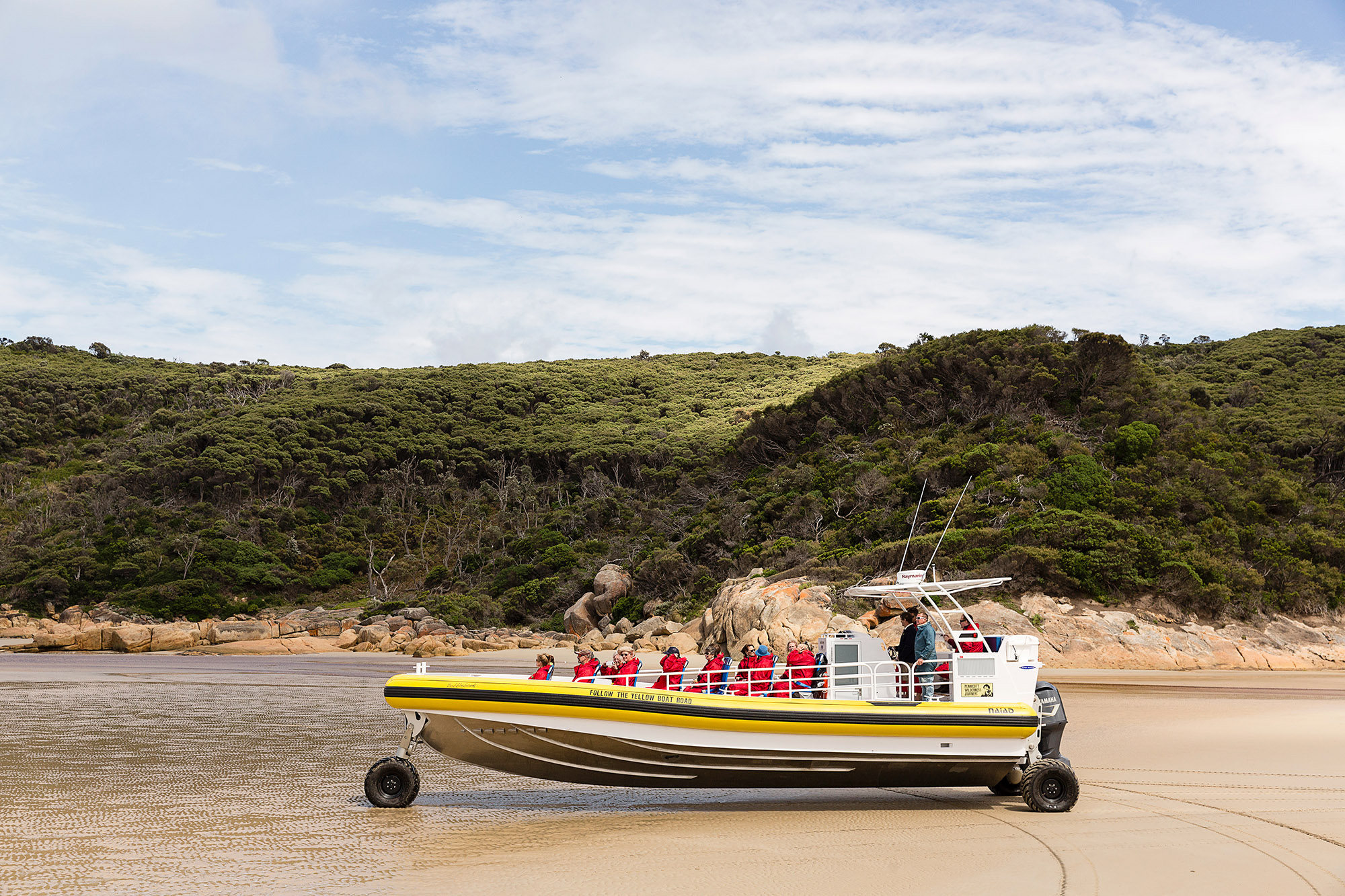
At Wanderer Adventures, we've built our entire operation around showcasing Wilsons Promontory's wild coastline while respecting the delicate ecosystems that make it special. Our small-group wilderness cruises explore the same coastline where Squeaky Beach sits, giving you access to areas of the marine national park that few visitors ever see. Our amphibious boats launch directly from the beach, leaving no trace while providing unique perspectives on this remarkable place.
Our local crew shares deep knowledge of the region's geology, ecology, and history. We don't just point out landmarks. We help you understand how the forces of wind, water, and time created this extraordinary landscape, including the very sand beneath your feet.
Whether you're walking across Squeaky Beach listening to the music of quartz grains or watching seals haul out on the rocks from our deck, Wilsons Promontory offers experiences that change how you see the natural world. Book a cruise with us and discover why this corner of Victoria continues to inspire wonder in everyone who visits.