There's a place off the coast of Victoria where more people have walked on the moon than set foot on its shores. Skull Rock, also known as Cleft Island, sits just off Wilsons Promontory like a granite sentinel guarding the southern edge of mainland Australia. This skull-shaped monolith, with its gaping cave mouth and windswept cliffs, has captured the imagination of sailors, explorers, and adventurers for centuries.
What makes Skull Rock so special? For starters, only nine people have successfully landed on the island and made it off alive. The cave inside is so massive it could swallow the Sydney Opera House whole. And until recently, the only way to see it was from beaches five kilometers away, squinting through binoculars at a faint gray blur on the horizon.
Today, visitors can get closer than ever before. But the rock hasn't lost its mystery. Let's explore what makes this one of Australia's most exclusive natural wonders.
What is Skull Rock? A granite monolith like no other
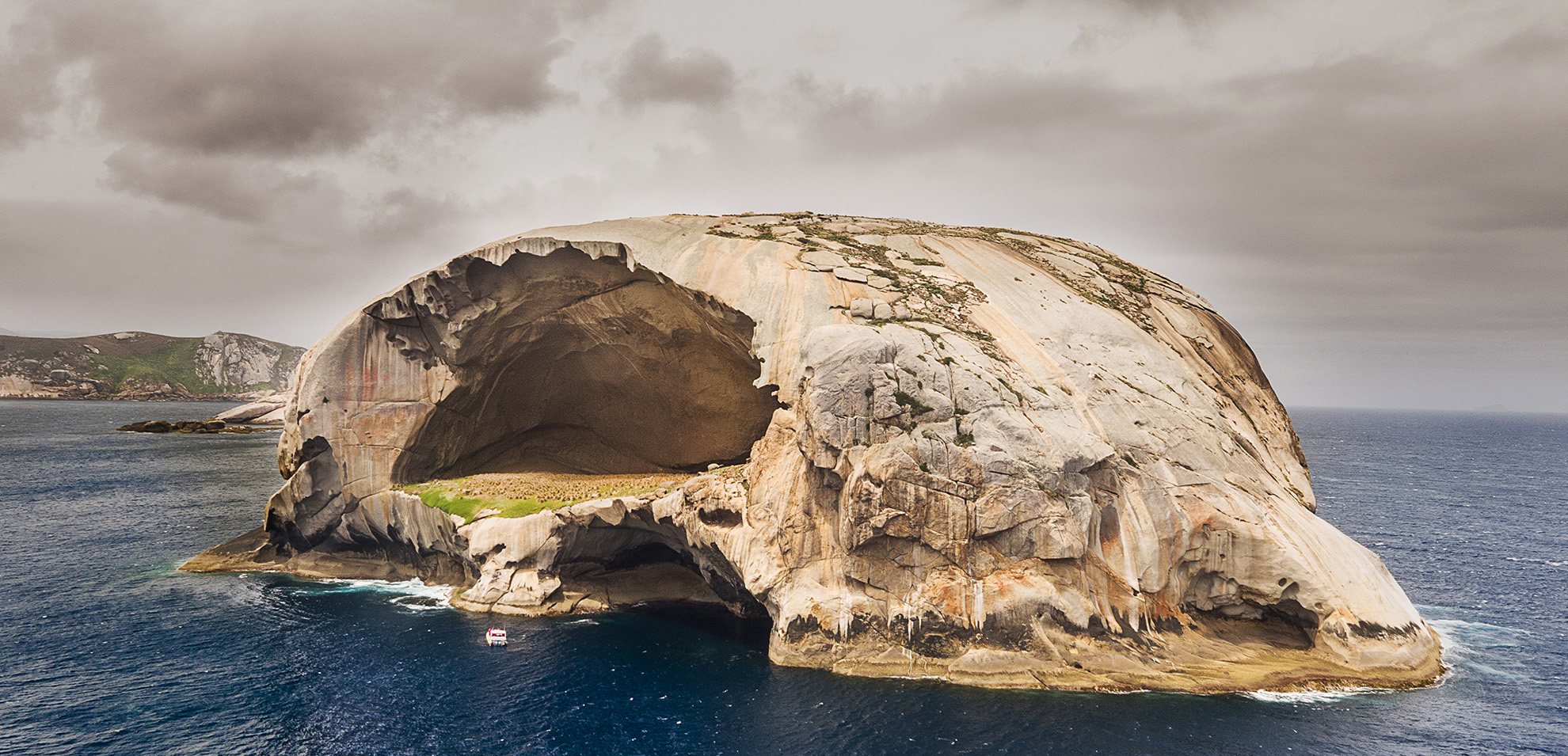
Skull Rock, formally named Cleft Island, rises 113 meters from the waters of the Bass Strait. It's part of the Anser island group, located just off the southwest coast of Wilsons Promontory in Victoria. From certain angles, the island looks uncannily like a human skull, hence its more evocative common name.
The most striking feature is the massive cavern that dominates the western face. This cave measures 130 meters wide, 60 meters high, and 60 meters deep. To put that in perspective, you could fit the Sydney Opera House inside with room to spare. The cave floor is carpeted with grass, creating an surreal scene: a hidden meadow suspended in granite, accessible only by sea or air.
The rock itself is granite, carved over millions of years by the relentless forces of wind and water. When sea levels were higher thousands of years ago, waves crashed against the island with tremendous force, slowly hollowing out the cavern. The result is one of Victoria's most impressive geological formations, and one of the most photographed landmarks in Wilsons Promontory Marine National Park.
The island's location in the Bass Strait means it's battered by some of Australia's most temperamental waters. High winds and powerful swells have shaped every contour of the rock, creating not just the main cavern but multiple smaller caves and crevices. From up close, visitors can spot five or six different "skull shapes" in the rock formations, depending on viewing angle.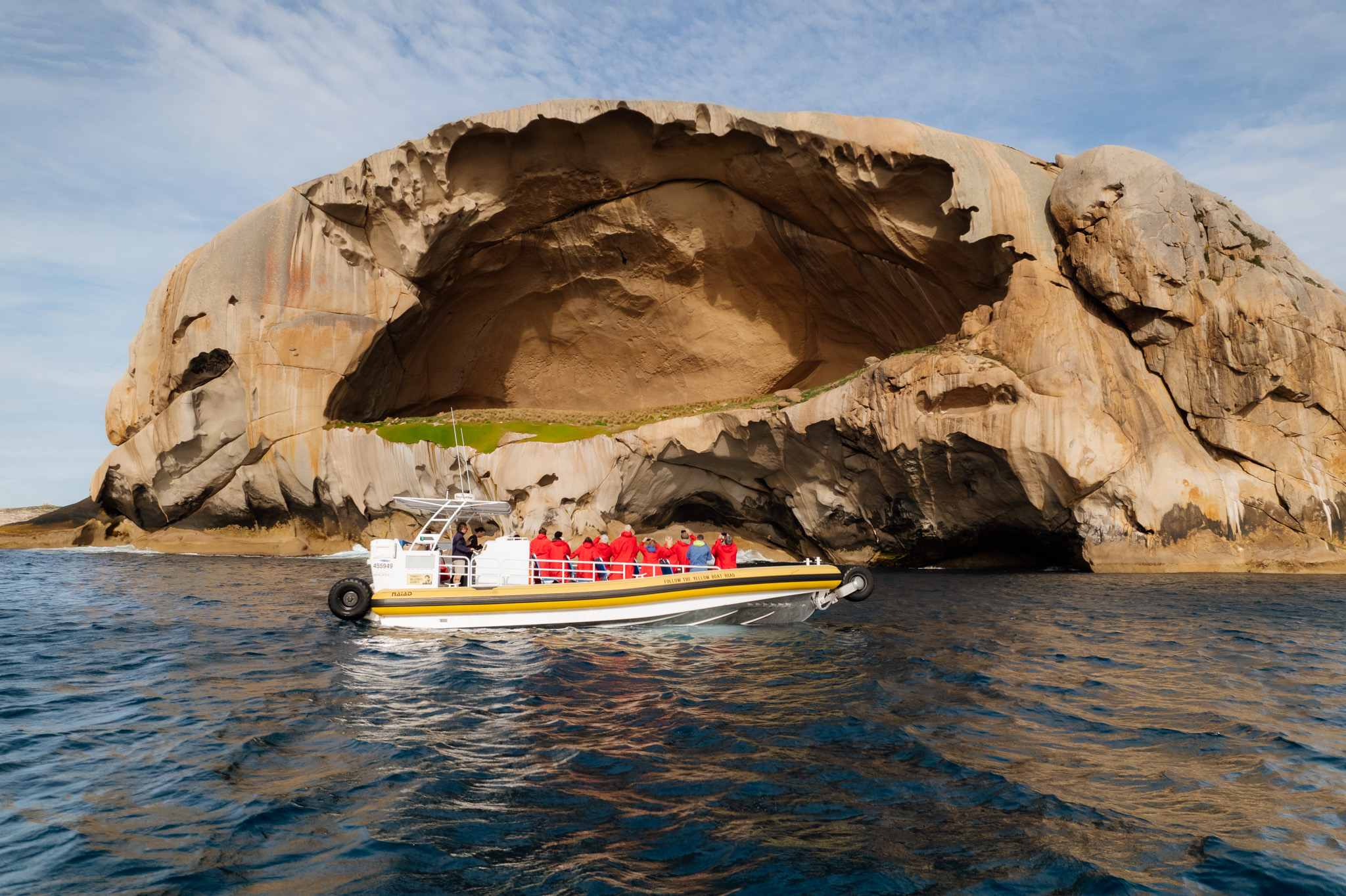
How Skull Rock was formed: Ancient waves and time
The story of Skull Rock begins millions of years ago when molten granite forced its way up through the earth's crust. This granite forms the backbone of Wilsons Promontory, one of the largest exposed granite massifs in Australia. Over geological time scales, erosion shaped the landscape we see today.
The cave itself formed during periods when sea levels were significantly higher than they are now. Wave action pounded against weaknesses in the granite, gradually carving out the massive cavern. Unlike limestone caves that form through chemical dissolution, Skull Rock's cave is purely mechanical: thousands of years of water, sand, and stone grinding against each other.
The Bass Strait's notorious weather played a crucial role. The strait is one of the most dangerous stretches of water in Australia, with strong winds and large swells common year-round. These conditions accelerated the erosion process, sculpting the dramatic overhangs and smooth walls visible today.
What's remarkable is how well-preserved the cave remains. The granite composition is extremely resistant to further weathering, essentially freezing the formation in its current state. Inside, the walls are smooth and polished, evidence of the abrasive forces that created them.
The grassy floor of the cave is another unique feature. Soil and vegetation have accumulated over millennia, creating a small ecosystem isolated from the mainland. The only permanent land residents are skinks, small lizards that have made this unlikely habitat their home.
A history of mystery: Explorers, shipwrecks, and cannonballs
European explorers first recorded Skull Rock in the late 18th century. Its distinctive shape made it an immediate landmark for sailors navigating the treacherous waters of the Bass Strait. The name "Skull Rock" came naturally, a descriptive label that stuck.
In 1853, authorities proposed building a lighthouse on the island. The idea made sense on paper: the rock sits at a critical point for maritime navigation, marking the southern approach to Wilsons Promontory. But a site inspection quickly revealed the impracticality. The cliffs are sheer, the landing sites nonexistent, and the terrain inside the cave too unstable for construction. The lighthouse was built on the mainland instead, at the site of the current Wilsons Promontory Lighthouse.
The island's most famous maritime connection involves the TSS Kanowna. This vessel, which had served as a hospital ship for wounded soldiers from Gallipoli, struck a reef near Skull Rock in 1929. The impact was catastrophic. Survivors later described "an almighty crash and the ship shuddering from end to end, then lurching." By 10 pm, all 141 passengers had abandoned ship, rescued by the nearby SS Mackarra. The Kanowna eventually drifted and sank in the Bass Strait. Divers located the wreck in 2006, on Anzac weekend, a poignant discovery for a ship with such a storied wartime history.
Kanowna Island, which hosts one of Victoria's largest seal colonies, is named after the vessel. The wreck now lies on the seabed near Skull Rock, a protected heritage site and reminder of the strait's dangers.
Adding to the island's intrigue, old cannonballs have been discovered inside the cave. Local historians believe passing ships used the distinctive rock formation as target practice over the decades. During a recent expedition, Scottish television presenter Neil Oliver and his team landed on the island by helicopter and abseiled into the grassy cavern, documenting these decaying remnants of maritime history.
Wildlife of Skull Rock: Seals, seabirds, and seasonal whales
Skull Rock sits within the Wilsons Promontory Marine National Park, which received the prestigious Global Ocean Refuge System (GLORES) Platinum Award in 2018. It's the first park in Australia and one of only six worldwide to receive this honor, recognizing its exceptional protection of marine ecosystems and biodiversity.
The park's waters are remarkably rich. Marine biologists compare the ecosystem to the Great Barrier Reef in terms of biodiversity, despite the cooler waters. Giant sponge gardens thrive in the depths, featuring colorful sea fans, orange and blue lace corals, sea tulips, and long sea whips. Weedy sea dragons, red velvetfish, eastern blue gropers, and schools of barber perch make these waters their home.
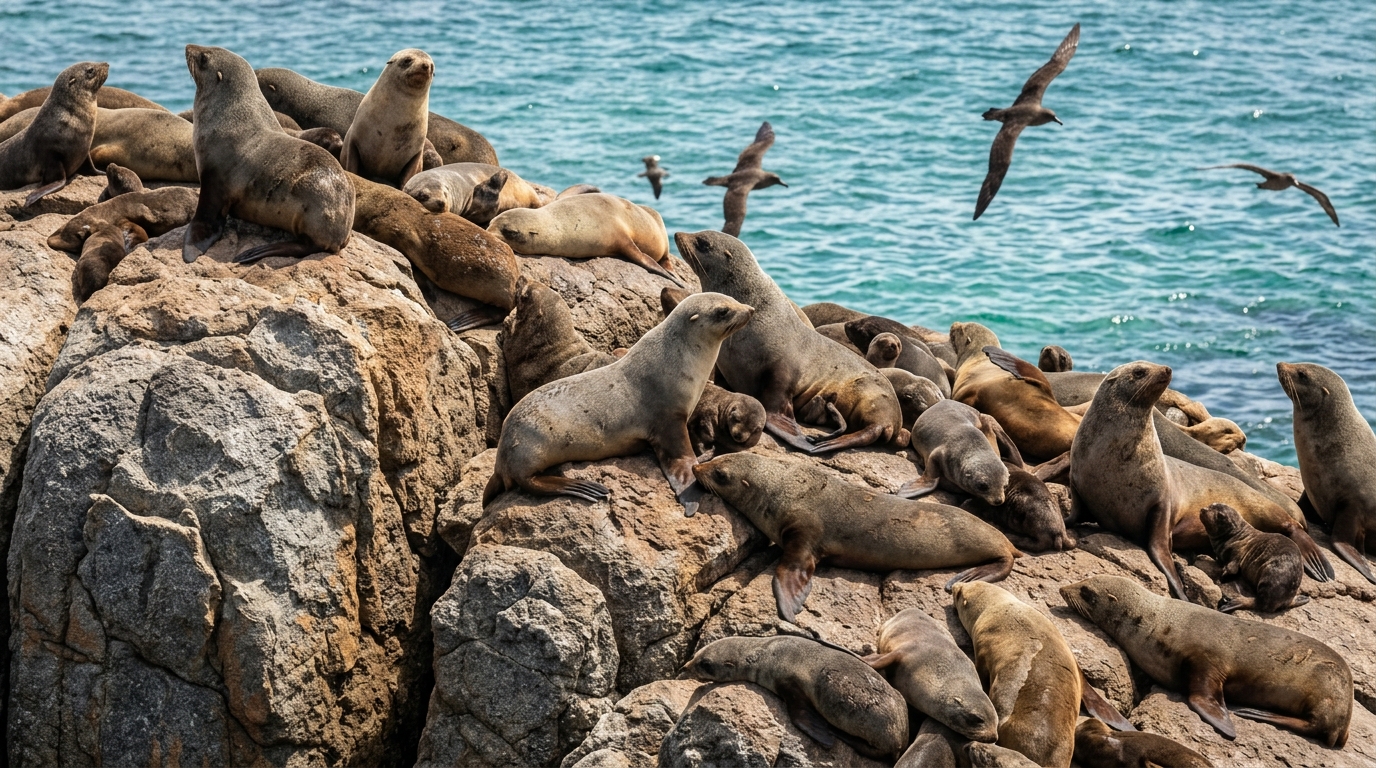
Above the waterline, the wildlife is equally impressive. Kanowna Island hosts one of Victoria's four breeding colonies of Australian fur seals. These charismatic marine mammals can be seen lounging on the rocks, nursing pups, or playfully swimming around boats. November and December are particularly active months when seal pups are born and white sharks frequent the waters near the pupping areas.
The islands support massive seabird populations. Little penguins nest in burrows, while short-tailed shearwaters, fairy prions, silver gulls, and Pacific gulls fill the skies. The cave at Skull Rock itself serves as a crucial breeding ground for black-faced cormorants and other seabirds, protected from predators and weather.
From October to April, humpback and southern right whales migrate past Wilsons Promontory, traveling from Antarctic feeding grounds to Queensland calving areas. During peak season, whale sightings are almost daily. Bottlenose dolphins are seen on roughly eight out of ten tours, often riding the bow waves of boats or leaping dramatically from the water.
The Wilsons Promontory Marine National Park plays a vital role in protecting these species. Strict regulations govern vessel approach distances and behavior, ensuring wildlife isn't disturbed. The park's status means commercial operators must hold specific permits and follow guidelines designed to minimize human impact.
Visiting Skull Rock today: Your gateway to the exclusive
For most of its recorded history, Skull Rock has been virtually inaccessible. The cliffs are too steep to climb safely. The surrounding waters are too rough for small boats. And even if you could land, the terrain inside the cave offers little purchase for anchors or footholds.
That changed with the introduction of amphibious boat technology. These custom-designed vessels, developed specifically for Wilsons Promontory's unique conditions, can drive directly onto the beach at Tidal River before entering the water. This eliminates the need for docks or jetties and allows tours to access areas that would be impossible to reach by conventional boat.
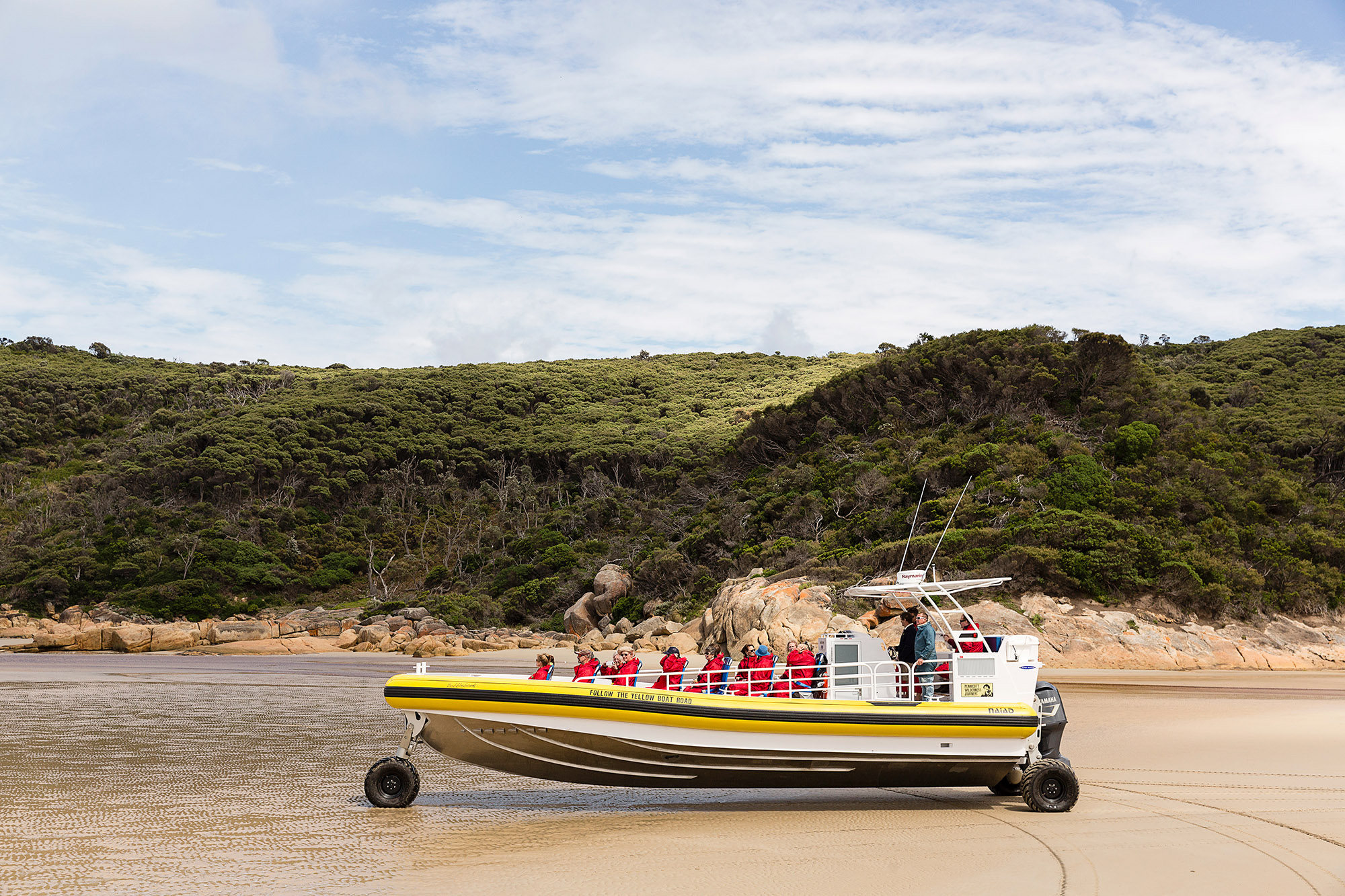
A typical tour follows the coastline south from Tidal River, passing Norman Beach and skirting the boulders of Mount Oberon. The route continues past Wattle Island, Anser Island, and the Anderson Islets before reaching the Glennie Islands group. Each stop offers different wildlife viewing opportunities and geological features.
South Point, the southernmost tip of mainland Australia, is another highlight. From here, there's nothing but open ocean between you and Antarctica. The historic Wilsons Promontory Lighthouse stands sentinel on the point, a working light that has guided mariners since the 19th century.
The climax of any tour is the approach to Skull Rock. As the boat circles the island, the skull-like profile reveals itself gradually. First, you notice the scale. Then the cave mouth comes into view, a dark maw in the granite face. Get close enough and you can hear the seals barking on nearby rocks and smell the salt spray hitting ancient stone.
Summer months (December through March) offer the calmest sea conditions and warmest weather. Winter tours (May through August) provide excellent whale watching opportunities. Spring and autumn offer a balance of decent weather and active wildlife.
Experience Skull Rock with Wanderer Adventures
At Wanderer Adventures, we've been sharing the wonders of Wilsons Promontory with visitors from around the world. Our local crew brings deep knowledge of the area's geology, history, and wildlife, along with a genuine commitment to responsible tourism.
We operate several tours that visit Skull Rock, depending on how much time you have and what you want to experience. Our Wilderness Cruise is a 2.5-hour journey that focuses on Skull Rock, the seal colonies, and the dramatic coastline. Departing daily at 11am (with an additional 2pm departure from November through April), this tour gets you up close to the granite walls and into the caves.
For those wanting the full experience, our Ultimate Day Cruise spends 5.5 hours exploring the promontory. You'll visit the lighthouse, enjoy morning tea at Refuge Cove, have lunch at Sealers Cove, and encounter thousands of seals before circling Skull Rock. At $295 for adults, it represents a full day of immersion in one of Australia's most spectacular national parks.
During whale season, our dedicated Whale Watching Cruise focuses on finding humpback and southern right whales as they pass through the Bass Strait. Orcas are occasionally spotted too, adding extra excitement to the journey.
What sets our tours apart? It's the combination of specialized equipment and local expertise. Our amphibious boats are purpose-built for these waters, with low environmental impact designs that let us get close without disturbing wildlife. Our guides know where the seals like to sun themselves, which cliffs host the eagle nests, and how to read the sea conditions for the safest, most comfortable experience.
We also take our responsibility as visitors to this land seriously. We're a licensed tour operator with Parks Victoria and hold Marine Mammal Seal Tour and Whale Watch Tour permits issued by the Victorian Government. We acknowledge the Gunaikurnai people, the Traditional Custodians of this Country, and their ongoing connection to land, sea, and culture.
Wilsons Promontory is approximately three hours' drive from Melbourne. Once you reach Tidal River, our booking office is clearly marked and our boats launch directly from the beach. We recommend booking in advance, especially during school holidays and summer weekends when demand is highest.
Skull Rock has remained mysterious for centuries. But mystery doesn't have to mean inaccessible. With the right guide, the right boat, and a spirit of adventure, you can experience what fewer people have seen than have stood on the surface of the moon. The skull-shaped silhouette is waiting. The seals are barking. And the cave, with all its secrets, is ready to reveal itself.